

Choosing the type of flooring is a decision with a lot of weight when designing the home. The flooring will determine the general appearance we want to create and the feeling and will be a background for everything that will come on it. Moreover, we do not choose our flooring every day anew, so we must use judgment and understand the consequences.
When we reach the stage of choosing the materials - we will start by choosing the type of flooring. The choice of flooring goes beyond the design aspect; each type chosen will dictate different costs, labor costs, and preparation of a suitable infrastructure (such as parquet, marble, or mosaic flooring), which should be taken into consideration account as part of the set of considerations.
Variable parameters to consider
Choosing the type of material: parquet that creates a warm feeling or marble that belongs to the category of cold materials?
The size of the flooring and its laying: should we choose a parquet in the form of a "fishbone" laying, square tiles of 120 x 120, tiles of 20 x 20, or perhaps rectangular tiles?
Type of finish: glossy flooring? Matte? Or Laminato (half glossy half matte)?
Color: bright? Dark? Dotted with terrazzo or ribbed?
Flooring maintenance, durability, and, of course, the costs of the material, flooring execution, and preliminary preparation (if required).
There are two main categories to choose from, and we will try to analyze the types a little so that you can make an informed decision.
Natural stone flooring
Natural stone flooring includes 2 main and popular families:
Marble
Marble is a homogeneous material made of rock, which changed its texture following crystallization and compression under different pressures and temperature changes in the depths of the earth and different mineral compounds. This natural process gives marble its quality, which is hard, strong, and relatively opaque.
Marble has a range of finish levels - from glossy and shiny to completely matte. It radiates luxury and cleanliness (we won't see the separating gaps as in porcelain granite flooring, for example). It is pleasant to touch and comes in various colors and finishes. Since it is produced from natural stone, the resulting flooring will be mixed and not identical from one unit to another. Still, it will blend homogeneously and interestingly.
It is chosen to be used mostly in luxury homes and prestigious public buildings.
Marble is a relatively cold surface with an advantage in the summer when it maintains a pleasant temperature on hot summer days. However, this advantage, manifested in the summer, turns into a disadvantage in the winter. Also, it is not cheap and requires the preparation of a type B tile infrastructure on which the marble will be laid. It is sensitive to cleaning agents and stains and requires polishing, burnishing, and maintenance every few years.
Slate stone
This flooring material is mainly used as outdoor flooring. It is also suitable for the home but depends on the style - compatible with an ancient country style.
The slate stone comes in a natural, rough, and uneven finish. It does not absorb water, has high durability, easy to maintain, and is obtained as a surface with uneven roughness.
Slate stone is an excellent and cheap solution compared to granite and marble, especially when used in the garden.
Artificial stone flooring
Ceramic Flooring
Ceramic tiles are considered cheap and simple. They are made of an industrial material coated with a layer of glazed glass. Ceramics have two typical glossy and matte finishes that come in variable grades. Like ceramic tools, ceramic tiles can be glazed in different colors. This glaze helps to seal the tile and gives it its unique color and shine.
The notable disadvantage of using ceramic tiles is that the glaze layer may break, and we will see the different layers underneath.
It is a popular and standard option used for bathroom wall covering due to its high abrasion and low absorption capacity. Due to its water- and moisture-resistance feature, it is suitable for easy cleaning with many cleaning agents.
Today we can find different types of ceramic tiles that combine quality and design at a cheap price.
Porcelain granite
This is a classic and most popular upgrade to the ceramic tiles that were more commonly used in the past.
Some advantages of using porcelain granite tiles include high abrasion resistance, impermeability to liquids, not requiring special maintenance, a wide range of accessible and convenient prices, and above all, a wide variety of types, textures, colors, textures, finish levels, and sizes.
Porcelain granite flooring is a reinforced and durable development of the ceramic flooring I told you about earlier. If the ceramic tiles receive a glaze only on the outer layer, in porcelain granite tiles, the glaze is mixed in the tile itself, making the tile much more durable than the ceramic.
Porcelain granite tiles can simulate marble, parquet, stone, and countless examples and designs.
If you are the kind of person who likes rough and modern industrial design - a concrete floor is the solution for you.
Concrete is very durable and easy to clean. Although it may be somewhat expensive, its appearance is unique. It can be found in a variety of forms of application, different textures, and a wide selection of sizes.
Concrete is an absorbent material that absorbs water. When choosing to use it as flooring, applying a special sealer that keeps the floor sealed against water penetration is important.
A smoothed concrete floor can be applied by pouring the concrete on the desired surface, smoothing, painting, and coating it with a sealer or epoxy paint. Creating expansion seams/separation apertures is important to prevent uncontrolled explosions/cracks on large surfaces. Pigments can be added to it and reach a level of finish chosen. Besides the quite expensive cost of using this technique, the main disadvantage is the difficulty of taking apart the surface if there is an explosion in the pipeline. It will never look the same if we want to complete and renew the place we opened for repair.
Another solution is the use of concrete tiles - which are actually concrete poured into molds that produce tiles. Painted concrete tiles or tiles with reliefs can be produced.
Well, we talked so much about types of flooring, and we even talked about concrete... but you can't finish the subject without touching the world of parquet.
Although, as Israelis, we usually like to wash the floor and pour large amounts of water, parquets have been given a place of honor and are found in almost every home. The fact that there is a growing selection of inexpensive synthetic parquets with a look that almost identically mimics real wood parquets makes the concept more accessible.
The use of parquet has become a sweeping trend mainly because of the feeling of warmth they give. We usually use parquet mainly in the bedrooms unless we like the rustic and warm look and want it in public spaces as well.
So what are we going to choose? Natural wood parquet, laminated, or perhaps polymer?
Natural wood parquet
There are two common types: layered wood parquet, which consists of pallets made of several layers, and solid wood parquet (goshni), which consists of real wood beams. Both have similar advantages and disadvantages, but the significant difference is the higher price of the solid wood parquet.
Flooring with natural wood parquet is more expensive than synthetic. Still, the look that will be obtained and the feeling when we step on it are undoubtedly noticeable.
Natural parquet flooring is better for installation at a home that will accompany you in the long term. It is important not to let standing water remain on it so that it does not soak into the parquet and the wood will swell. However, even if damaged, wood parquet can be renewed when it gets dirty or scratched (and it happens.. but this is also part of the beauty and the character it gets over time..)
Natural parquet is more pleasant to touch and better insulates heat and cold.
The variety is admittedly more limited, but the types of polish applied as a finish can change its color and give another kind of finish and color.
Laminated parquet flooring
This kind of parquet belongs to the synthetic family. It is wood-like and simulates natural wood parquet. It is resistant to damage, unlike natural wood.
Many will go for the synthetic parquet option mainly because of its price. It lasts for years, but even with it, you must be careful and not let water stay on it long. Because it is industrially produced, it is more resistant to damage, but in terms of touch, it is still not the real thing.
Polymer parquet
Polymer parquet has become more popular in recent years. It is based on plastic, with its top layer being a wood-like print (mostly) with a waterproof coating. So its prominent advantage over colored or laminated wooden parquet is that it is completely water resistant and can actually be washed. It allows installation on a uniform surface without gaps. However, one of its greatest disadvantages is that it is not real; it does not feel like walking on a natural wooden floor and those who like to walk barefoot will feel it immediately. Also, unlike laminate flooring, which is also industrial, it is significantly more expensive.
You must be confused by the variety and selection, even before you went to showrooms and tried to match the type, color, and size of flooring that will speak to the design style you connect with...
You are welcome to contact me. I promise to focus and accompany you to a result that will hit your visibility, needs, and budget.
Lilian Benshoam
Architect and interior designer.
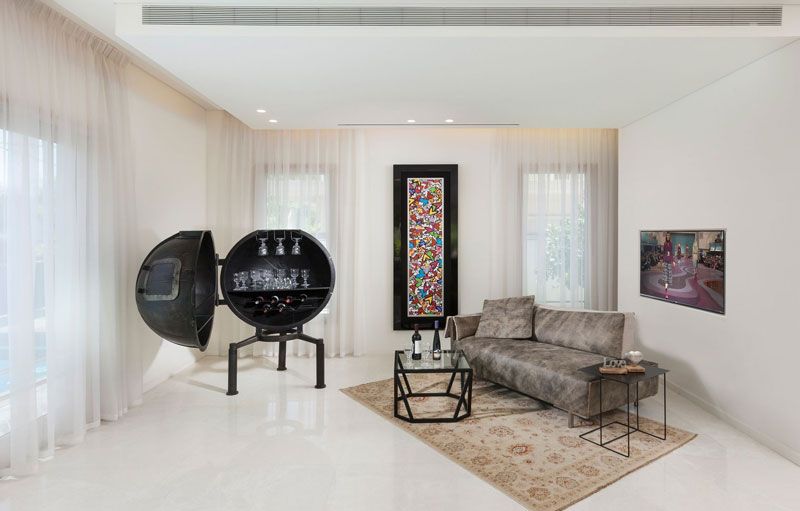
(Source: Architecture and Interior Design – Tel Aviv Villa B Project)
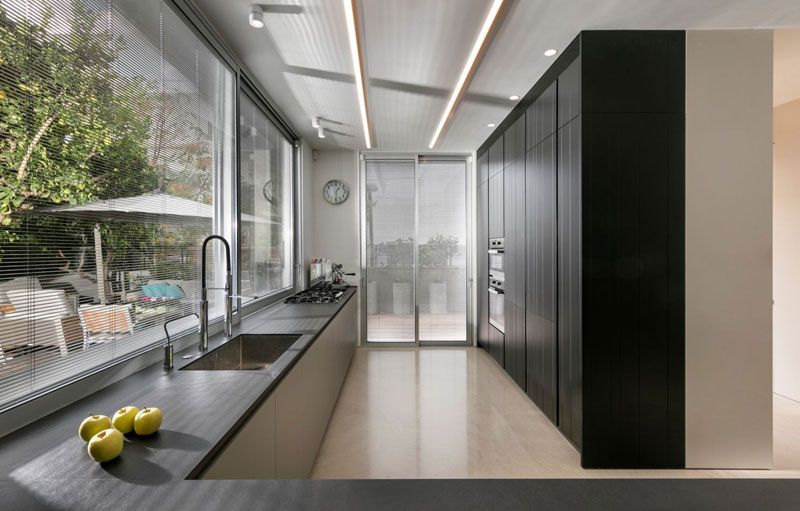
(Source: Interior Design – Ramat Hasharon Villa N Project)
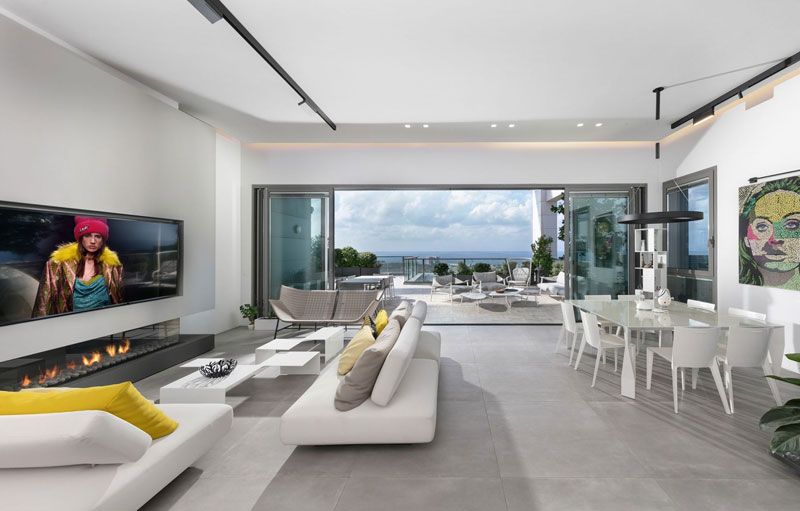
(Source: Interior Design – Herzliya Penthouse Apartment S Project)
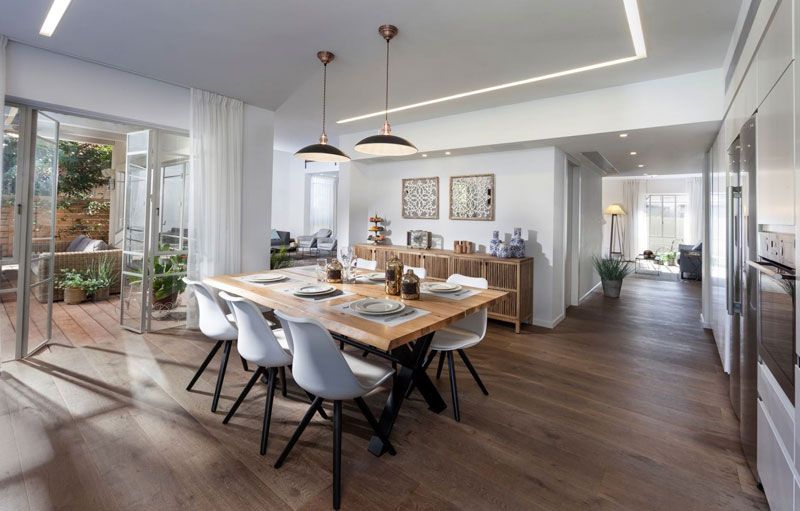
(Source: Architecture and Interior Design – Ramat Hasharon Villa V Project)

(Source: on the right, Architecture and Interior Design – Ramat Hasharon Villa V Project)
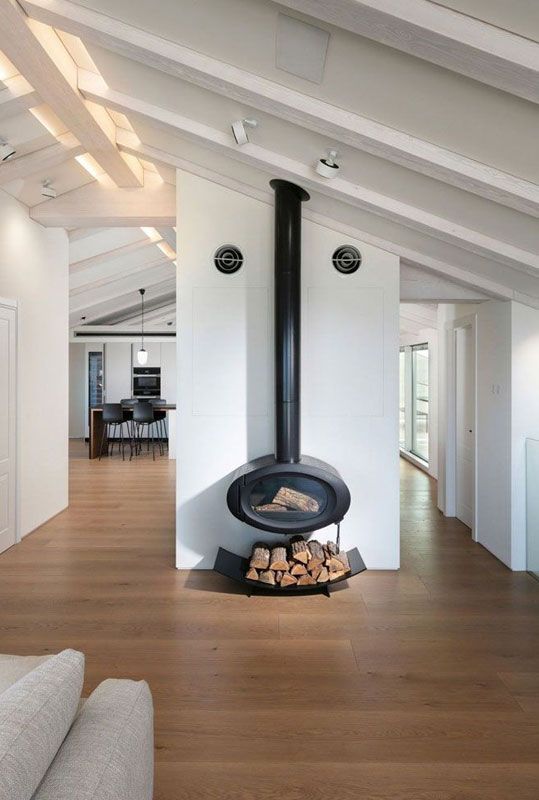
(Source: on the left, Interior Design – Jaffa Penthouse Apartment H Project)
87 Sokolov St., Ramat Hasharon 47238 | Tel.: +972-3549932 | Mobile: +972-522333288 | email: [email protected]
Whatsapp: +972-522333288


